
Photos I like
and why

The wonderful thing about dropping out of my art history degree has been the new ability to write about art, fully and freely and without convention. So, here are some photographs that I like, in no particular order, with no chicago referencing and NO RULEZ. Some of these photos are confronting, this is the nature of photojournalism.
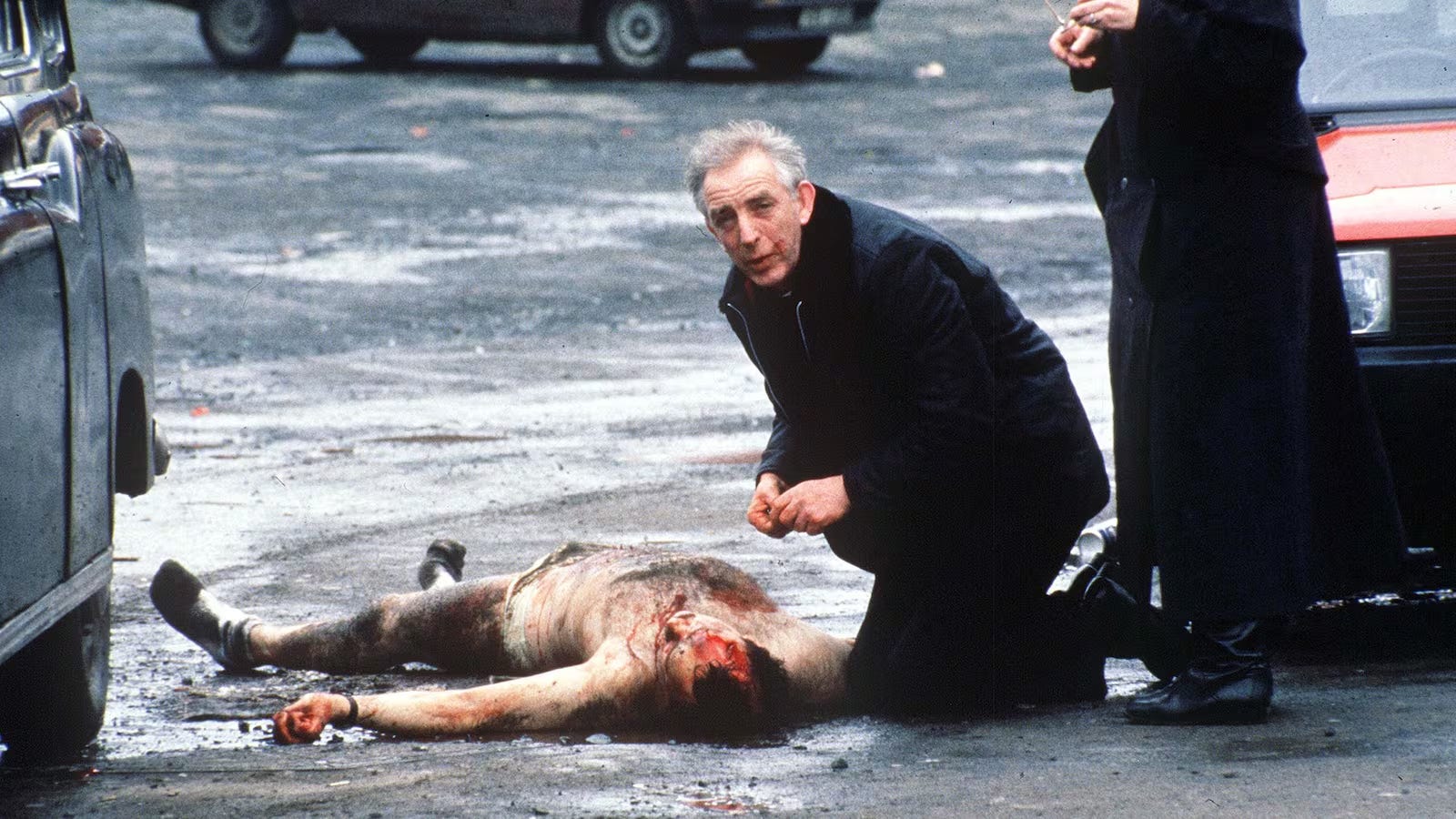
In this photograph, catholic priest Alec Reid kneels over the body of David Howes, a British soldier lynched by attendees of the funeral of IRA member Caoimhín Mac Brádaigh. His mouth is smeared with the soldier’s own blood, having just spent an agonised half hour attempting to resuscitate him via mouth-to-mouth. At that moment, the priest had just been told to cease compressions, that the man was dead. I like this photograph because of the many complex layers it contains. Three provisional IRA members were killed by British forces in Gibraltar, and an Ulster loyalist bombed their funeral, where one IRA member and two Catholic civilians were killed. Then, at yet another funeral in the chain of killings, two British soldiers took a wrong turn into a bereaved crowd of Irish Republicans, and lost their lives. Father Reid was a monumental figure in the eventual Northern Ireland peace process, campaigning for an end to the brutality of The Troubles.
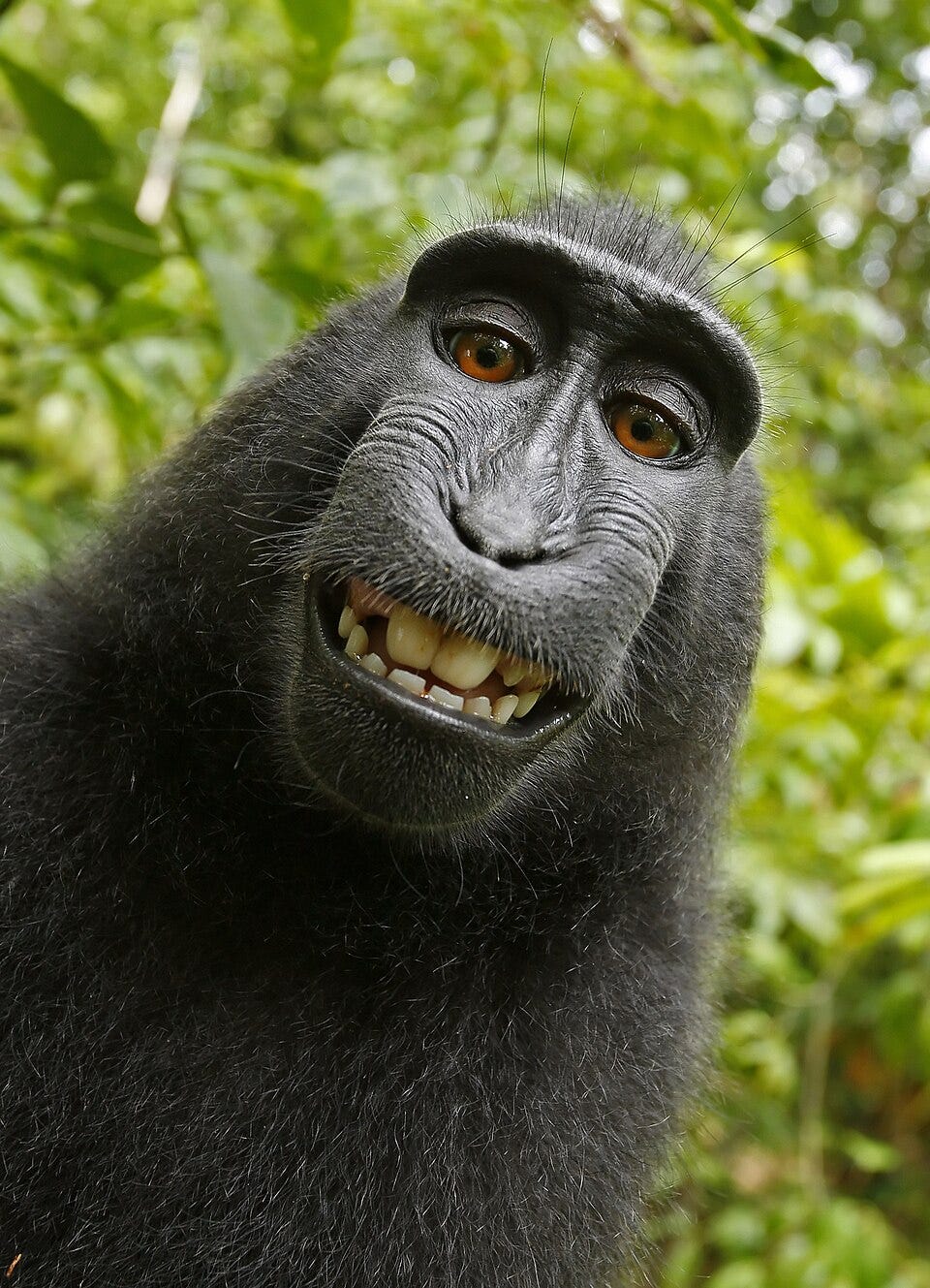
Widely known as ‘Monkey Selfie’, though officially named Monkey Steals Camera to Snap Himself. What more is there to say… Monkey take selfie. A simple google search and you’ll find that this photo is quite controversial. Wildlife photographer David Slater was photographing endangered Celebes crested macaques in Indonesia when, you guessed it, monkey take selfie. The ensuing copyright battle between Slater, Wikimedia commons, and, unsurprisingly, PETA, eventuated in a legal dispute between Slater and ‘Naruto’ (the name given to the monkey by PETA), which was eventually dismissed on the grounds that copyright law does not generally apply to animals.
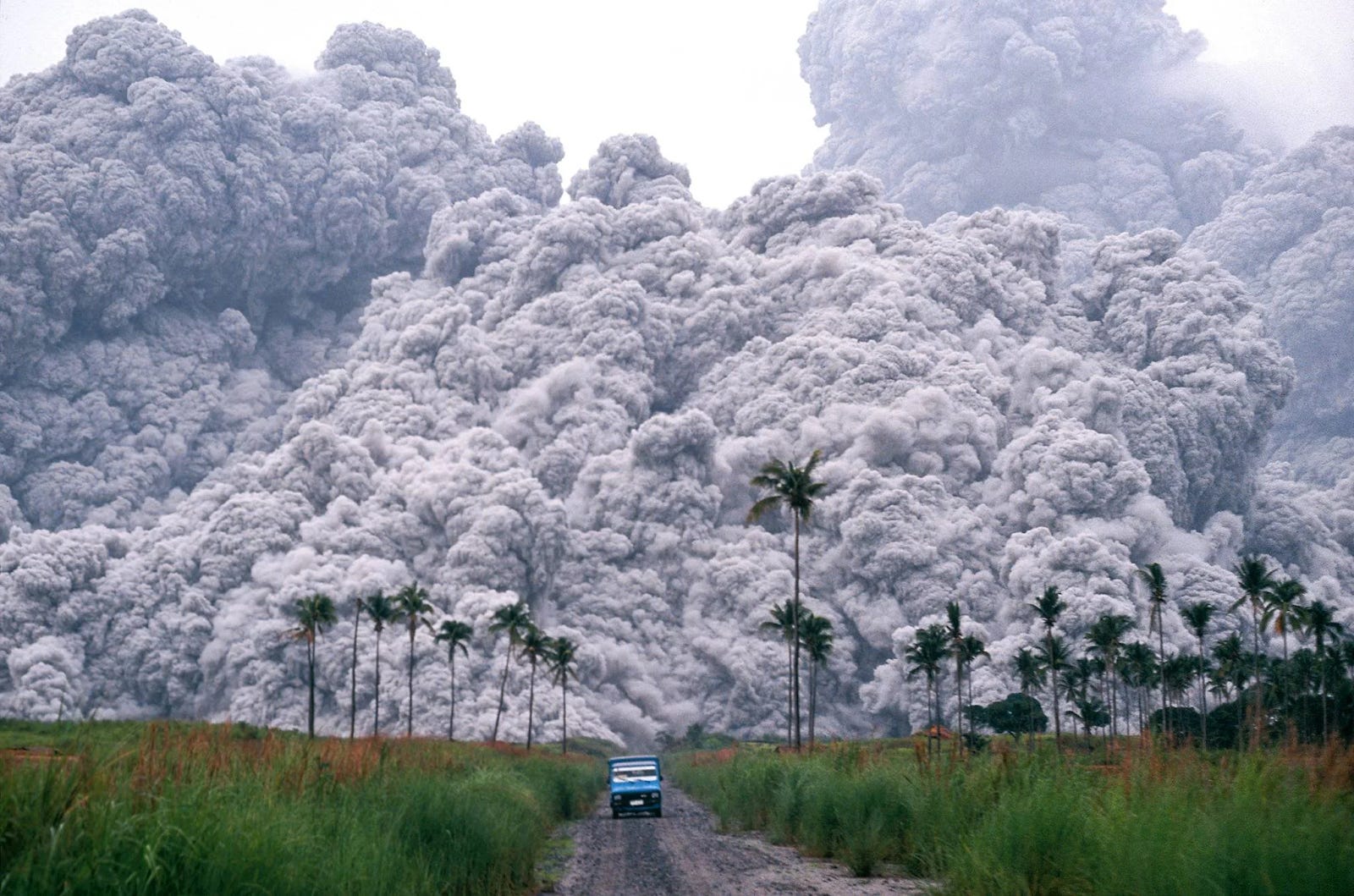
In June of 1991, Mount Pinatubo erupted in the Central Luzon region of the Philippines, covering the surrounding towns in volcanic ash and pumice, displacing 10,000 people and killing over 800. This photograph depicts a lone pickup truck hurtling away from the impending wall of lethal volcanic ash. The Oxford dictionary defines the sublime as something “of very great excellence or beauty”, ie. an orchestral performance, or a painting. In the 16th century “sublime” meant - “of a high place” or “very high up”. In Romanticism, the sublime does not describe the object but rather the abject, being a feeling of fear, awe, revulsion and wonder at the natural world. It is interesting that ‘sublime’, which once meant high up, came to mean low down, looking up in awe, and now means ‘greatness’, not in the way of size, but instead, in the way of quality. All of this is to say - to me, this photograph embodies a kind of sublime, in all senses of the world. The sheer power of the ash, the soft green of the grasses and the tiny truck on the narrow dirt road work in this scary, wonderful, magic way.
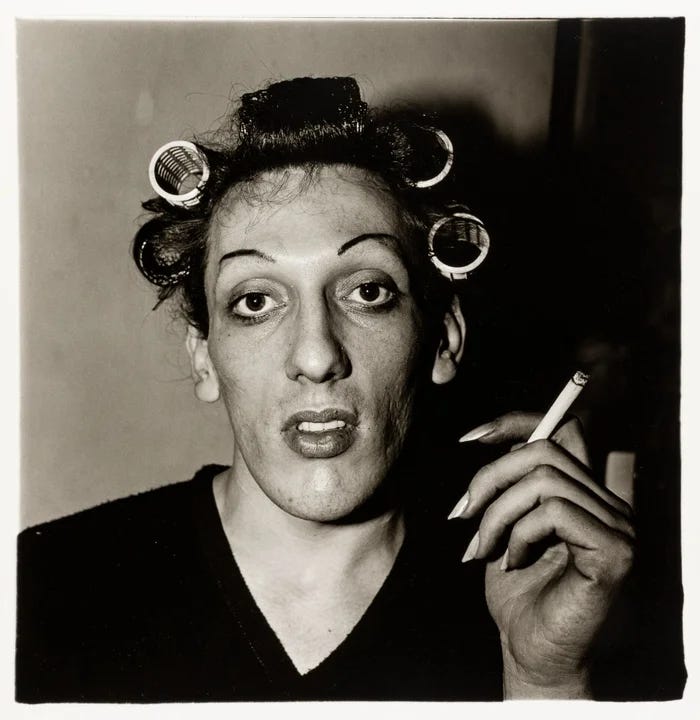
What is there to say about Diane Arbus that hasn’t already been said? Visionary icon legend. I love this photo because it showcases something that Arbus is very good at, which is the subject-object relationship. Some describe her as a photographer of freaks, but I like to approach her work through the lens of ‘uncompromised’. I love the way the light plays across the subject’s brow bone, the way her fingernails glow against the background. I love that Arbus used medium format. Nuff said!
There are a squillion more things I could say about these photos and a squillion more photos I could talk about, but this is it for now.
Love,
Phoebe
squillion!! omg I love squillion, this was so fun to read phoebe ><